Men and Women
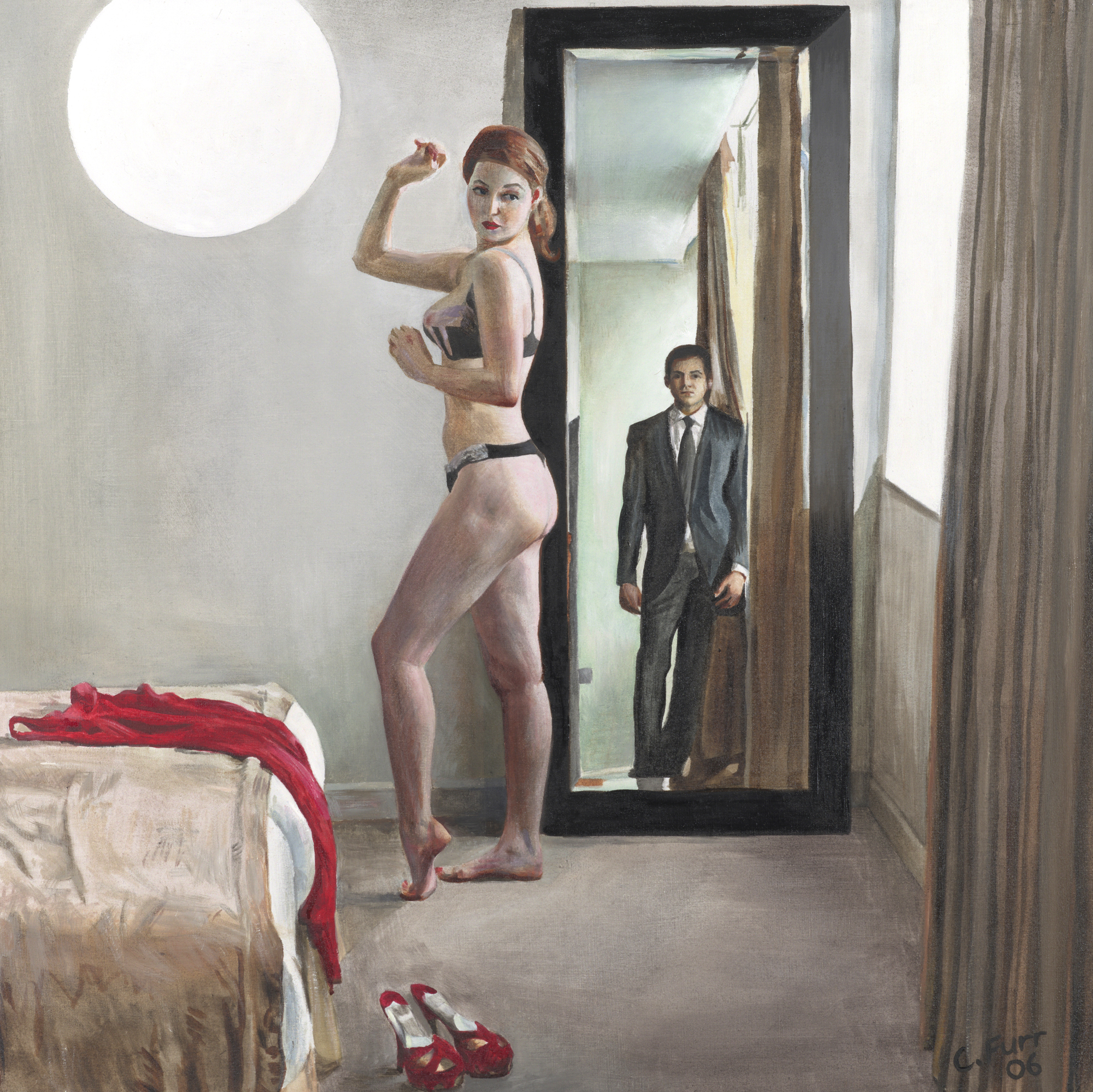
Six paintings were produced in the “Men & Women” series starting with ‘Red & Black” in 2006 and ending with “Flesh and Blood” being completed in 2011.
These works evolved out of the Kitchen sink period with its theatre of dynamics and the realist and personal depictions of Furr, his wife and friends. Models were used and an impersonality becomes prevalent as a theme.
2006 saw Furr become 40 years old. The depiction of the relationships between men and women turn from the dour realism of the kitchen sink into brightly coloured imagined scenarios using models in anonymous hotel rooms which may reflect not only the aesthetic of the decade but Furr’s personal mid-life period. In 2006 he also painted some small, quickly executed ‘joke paintings’ that deal with the theme of existence in almost comic book ways.
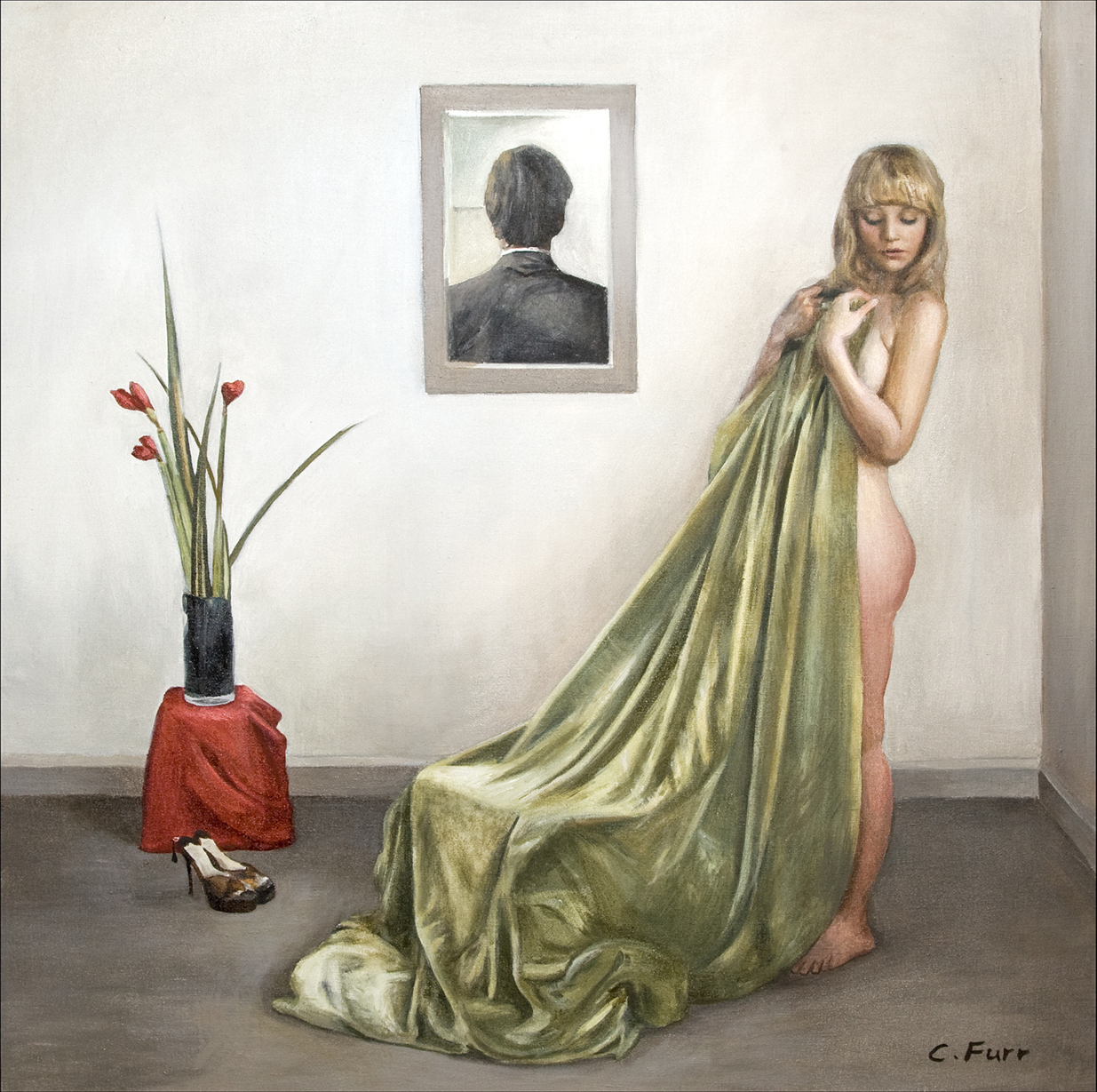
The K -West hotel in Hammersmith became the location for the ‘Men and Women’ series and sittings occurred here. The muted and limited palette of the nineties – the era of ‘grunge’ – changes to a brighter palette and bolder use of colour reflecting the more optimistic and glamourous fashions of the ‘Y2K’ period. Often Areas of brightly coloured fabric or material are included in the compositions to provide strong areas of colour and Furr quoted Titian and his paintings of brightly coloured gold red and blue cloth as a direct inspiration. Furr’s friendship with the shoe designer Terry de Havilland influenced the ‘Men & Women’ series with the inclusion of various high heeled De Havilland shoes. The fashion theme continued with the inclusion of a Tom Baker suit which had “Not For Sale” emblazoned on the back of the jacket which is featured in ‘Not for Sale 2006”. The hotel space provides a blank backdrop with its associations of service, anonymity and transience.
The paintings within paintings or mirrors /windows that appear are reminiscent of Magritte and in Furr’s words were meant to ‘represent alternate realities’ in the surrealist fashion.
“I wanted to feature drapery as an element of the composition. In the 1700s there were specialist drapery painters which was like a craft. I like to see craft in Art as well as meaning. De Vinci did a tonal study of some drapery that I love. I also love Titan’s way of painting sections of beautiful brightly coloured fabrics. The flowers appear as ‘vanitas’ ephemeral things.”
These works evolved out of the Kitchen sink period with its theatre of dynamics and the realist and personal depictions of Furr, his wife and friends. Models were used and an impersonality becomes prevalent as a theme.
2006 saw Furr become 40 years old. The depiction of the relationships between men and women turn from the dour realism of the kitchen sink into brightly coloured imagined scenarios using models in anonymous hotel rooms which may reflect not only the aesthetic of the decade but Furr’s personal mid-life period. In 2006 he also painted some small, quickly executed ‘joke paintings’ that deal with the theme of existence in almost comic book ways.
The K -West hotel in Hammersmith became the location for the ‘Men and Women’ series and sittings occurred here. The muted and limited palette of the nineties – the era of ‘grunge’ – changes to a brighter palette and bolder use of colour reflecting the more optimistic and glamourous fashions of the ‘Y2K’ period. Often Areas of brightly coloured fabric or material are included in the compositions to provide strong areas of colour and Furr quoted Titian and his paintings of brightly coloured gold red and blue cloth as a direct inspiration. Furr’s friendship with the shoe designer Terry de Havilland influenced the ‘Men & Women’ series with the inclusion of various high heeled De Havilland shoes. The fashion theme continued with the inclusion of a Tom Baker suit which had “Not For Sale” emblazoned on the back of the jacket which is featured in ‘Not for Sale 2006”. The hotel space provides a blank backdrop with its associations of service, anonymity and transience.
The paintings within paintings or mirrors /windows that appear are reminiscent of Magritte and in Furr’s words were meant to ‘represent alternate realities’ in the surrealist fashion.
“I wanted to feature drapery as an element of the composition. In the 1700s there were specialist drapery painters which was like a craft. I like to see craft in Art as well as meaning. De Vinci did a tonal study of some drapery that I love. I also love Titan’s way of painting sections of beautiful brightly coloured fabrics. The flowers appear as ‘vanitas’ ephemeral things.”